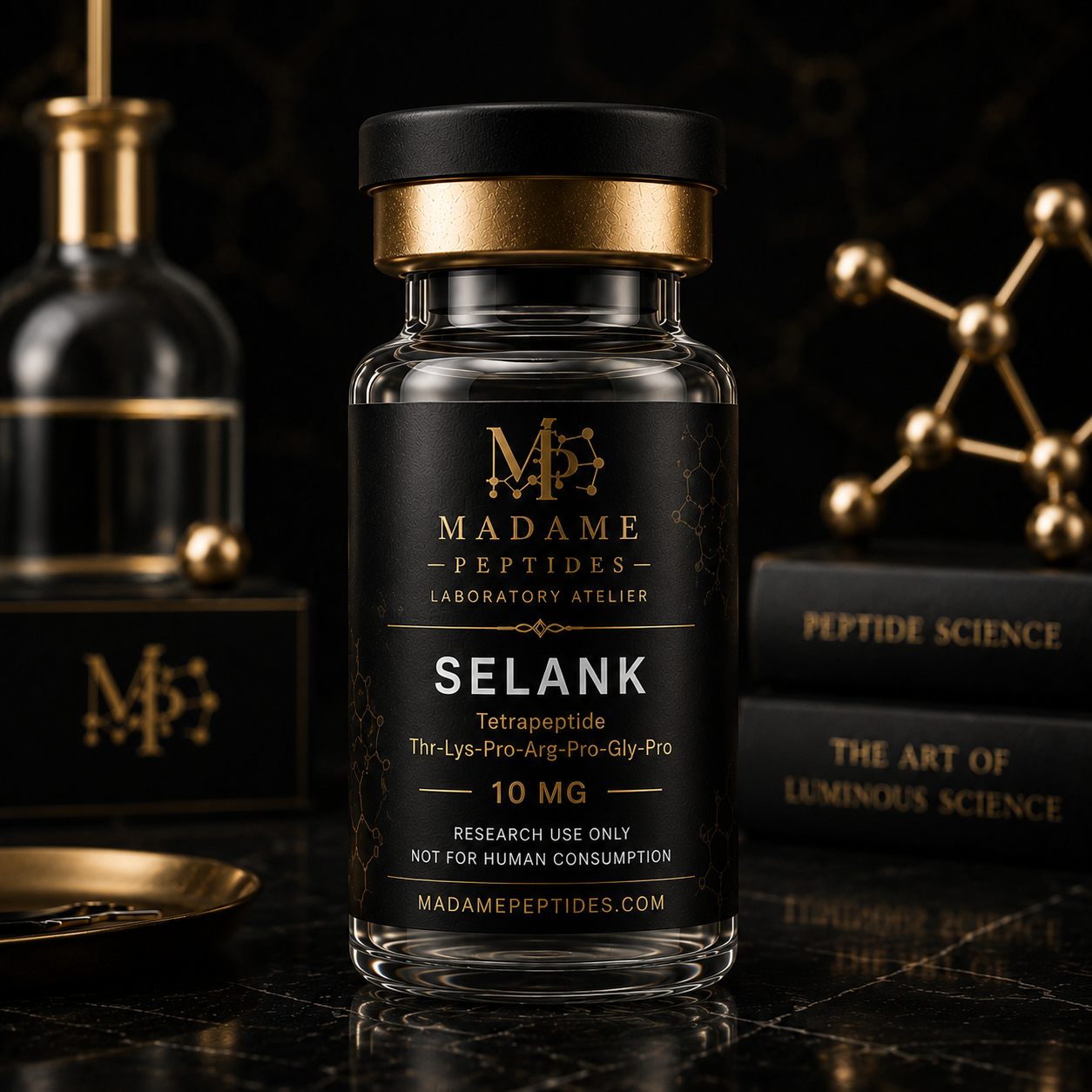

SELANK
Selank is a synthetic peptide developed from a naturally occurring immunomodulatory peptide known as tuftsin. It is a heptapeptide consisting of seven amino acids and has been investigated primarily for its potential effects on neurochemical signaling, stress-related responses, anxiety-related behavior, cognition, and nervous-system function.
A major area of Selank research involves its potential anxiolytic, or anxiety-modulating, properties. Experimental studies have examined how Selank may influence neurotransmitter systems involved in the regulation of stress and emotional responses. Research has particularly explored interactions involving GABAergic signaling, as well as possible downstream effects on serotonin and other neurotransmitter pathways.
Selank has also been studied in relation to learning, memory, attention, and cognitive processes. Preclinical research has investigated changes in gene expression and signaling pathways within the nervous system following exposure to Selank, providing researchers with additional avenues for studying how small regulatory peptides may influence neurological function.
Human research has also been conducted, including studies involving individuals with anxiety-related disorders. However, the overall clinical evidence base remains substantially more limited than that available for established pharmaceutical treatments, and much of the published Selank literature originates from relatively small studies and preclinical research.
Although Selank is sometimes grouped commercially with “sleep peptides,” it is more accurately characterized as a neuroregulatory research peptide. Its relevance to a Sleep & Circadian collection comes primarily from research surrounding stress regulation, anxiety-related pathways, and neurological processes that can interact with sleep, rather than evidence that Selank directly induces sleep.
Current research does not establish Selank as a proven treatment for insomnia, anxiety, or any other medical condition.
For laboratory research purposes only. Not for human consumption.
Zozulia et al., 2008: Human randomized comparative study involving 62 patients with generalized anxiety disorder and neurasthenia, comparing Selank with medazepam. This is useful for the human anxiety-related research mentioned in our description.
Peptide-Based Anxiolytics: Molecular Aspects of Selank Biological Activity, 2018: Examines potential mechanisms involving GABA receptor modulation and provides good support for the neurochemical portion of our description.
Volkova et al., 2016: Experimental research showing changes in expression of genes involved in GABAergic neurotransmission following Selank administration in rats.
Inozemtseva et al., 2008: Animal research examining Selank's effects on BDNF expression in the hippocampus, relevant to the neurological and cognitive-research side of the product description.
